Contents
At a glanceSide-by-side comparisonEase of fittingLight quality and glareHeadroom and room sizeStyle and changing your mindOur verdictFAQsOne of the cheapest ways to change a room is to swap what hangs from the ceiling. For most people that means choosing between a simple lamp shade on the existing pendant flex and a flush light that fixes directly to the ceiling. Both are easy to find in every style, from linen drums to rattan and glass. Shades are also one of the cheapest ways to bring a trend into a room for a season.
They behave quite differently once fitted. A shade hangs down and takes up headroom but needs no electrical work. A flush fitting keeps the ceiling clear but must be wired in. We look at the trade-offs in light, looks, cost and practicality below. We also cover headroom and glare, which tend to decide the matter in British homes with lower ceilings. If you are torn between the two, the sections below should make the choice clear, and the comparison table gives a quick summary of how they differ.
At a glance
Ceiling lamp shade


Popular choices include the 40cm White Pendant Light (£22.09), Giggi 19cm Chrome Kitchen Pendant Light (£22.91) and GIGGI 16cm Black Lampshade (£15.19).
See the whole lampshades range.
Flush ceiling light
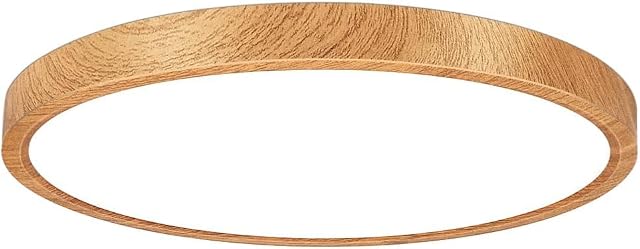


Popular choices include the 30cm White Flush Ceiling Light (£23.98), Monzana 38cm Flush Ceiling Light (£33.99) and Industrial Black Flush Ceiling Light (£15.99).
See the whole flush ceiling lights range.
Side-by-side comparison
| Feature | Ceiling lamp shade | Flush ceiling light |
|---|---|---|
| Fitting | Clips onto existing pendant | Wired to the ceiling point |
| Electrician needed | No | Often advised |
| Headroom | Hangs into the room | Sits tight to the ceiling |
| Light direction | Depends on shade shape | Mostly downward and outward |
| Choice of bulb | Any suitable bulb | Fixed LED or set bulb types |
| Typical cost | Usually lower | Varies more widely |
| Best for | Higher ceilings, quick refresh | Low ceilings, halls, bedrooms |
Ease of fitting
A non-electric shade simply fits onto an existing pendant lampholder with a shade ring. You switch off, unscrew the ring, drop the shade on and screw the ring back. It takes a few minutes and needs no tools, which makes it ideal for renters or quick makeovers. Check that the shade's hole size matches your lampholder, as some shades are made for smaller E14 holders. Most UK pendants use a standard size, but it is worth confirming before you buy.
A flush ceiling light replaces the pendant entirely and connects to the wires in the ceiling. Many people do this themselves, but it involves mains wiring, so switch off at the consumer unit and use an electrician if you are unsure. In bathrooms, the work is notifiable. Look for a flush fitting with clear wiring instructions and terminal labels. That makes the job easier and reduces the chance of a mistake, especially in older houses with colour-coded wiring that differs from the modern standard.
Light quality and glare
Shades shape the light in many ways. A drum shade in linen glows softly and sends light both up and down. An open rattan or wicker shade casts patterns on walls. A metal dome sends light straight down and keeps the ceiling dark. Light shades in pale fabrics let more light through and brighten a room. Darker shades block more light but create a cosier feel, especially in the evening.
Flush fittings usually have an opal or frosted diffuser that spreads light evenly and hides the bulb. That gives a calm, glare-free result, but it can feel flatter than a shade that throws light onto the walls and ceiling. Integrated LED flush fittings can also be very bright, which suits family rooms. Integrated LED flush fittings often list colour temperature too, so you can match them to other lights in the room.
Headroom and room size
In a room with a standard UK ceiling height, a large shade can feel low, especially over a walkway. If people need to walk under it, keep at least 2.1 metres of clearance below the shade. Over a table or bed, a hanging shade is less of a concern. Large shades can also look heavy in small rooms, even when headroom is fine. Keep the diameter sensible for the room and leave space around it so the shade does not crowd the ceiling or walls.
Flush fittings keep the full ceiling height clear, which makes them the safe choice in halls, small bedrooms and loft rooms. Very large rooms can make a flush fitting look small, so increase the diameter or add a second light in bigger spaces. A medium flush fitting in a living room often needs to be supported by lamps to avoid a flat look. Combining both styles is common in larger rooms, with a flush fitting near the door and a shade over the seating area.
Style and changing your mind
Shades are the easiest way to follow trends. Rattan, paper, pleated fabric and coloured glass shades can all be changed for little money, and you can swap them seasonally if you like. If you like to redecorate often, a shade lets you match new colours, fabrics and themes without any wiring. Many people keep a few shades and rotate them between rooms, which is cheap and makes a big difference to the feel of a space without needing any tools.
Flush fittings are more permanent and often more neutral. Decorative glass, ribbed or brass-trimmed designs add interest, but they still sit flat. If you want a statement, a shade or pendant does more. If you want a tidy, practical ceiling, flush wins. Many flush fittings now take a more decorative approach, with fluted glass, textured finishes and slim brass rims. These can bring style to a ceiling without the headroom issues of a hanging shade, so you do not have to choose practical over pretty.
Our verdict
Go for a lamp shade if you have reasonable ceiling height, want a fast, cheap update, or love the softer, more decorative light a fabric, paper or rattan shade gives. It is the ideal choice for renters and for rooms where the shade hangs over furniture.
Go for a flush ceiling light if your ceiling is low, people walk underneath the light, or you want even, bright light with no glare. It suits hallways, landings, small bedrooms and family rooms where practicality comes first.
Prefer to browse everything? Our full ranges of lampshades and flush ceiling lights have more sizes, finishes and price points than we could fit here.
Frequently asked questions
Do I need an electrician to change a lamp shade?
No. A non-electric shade fits onto your existing pendant lampholder and needs no wiring. Switch the light off, let the bulb cool, then fit the shade using the shade ring. Check the maximum bulb wattage listed for the shade.
Can I fit a flush light where a pendant was?
Usually yes, as both connect to the same ceiling point. Switch off at the consumer unit before starting. Metal flush fittings need an earth. If you are not confident with the wiring, a qualified electrician can do the swap quickly.
Which gives more light?
It depends on the bulb and design. Open shades and bright bulbs can give lots of light, while dark or dense shades block some of it. Integrated LED flush fittings often list a clear lumen figure, which makes comparing brightness easier.
Which is better for a low ceiling?
A flush ceiling light is the better choice for a low ceiling, since it keeps headroom free. If you prefer a shade, choose a shallow, wide design and shorten the flex so it sits close to the ceiling.